
A feasible, yield-aware plan in minutes
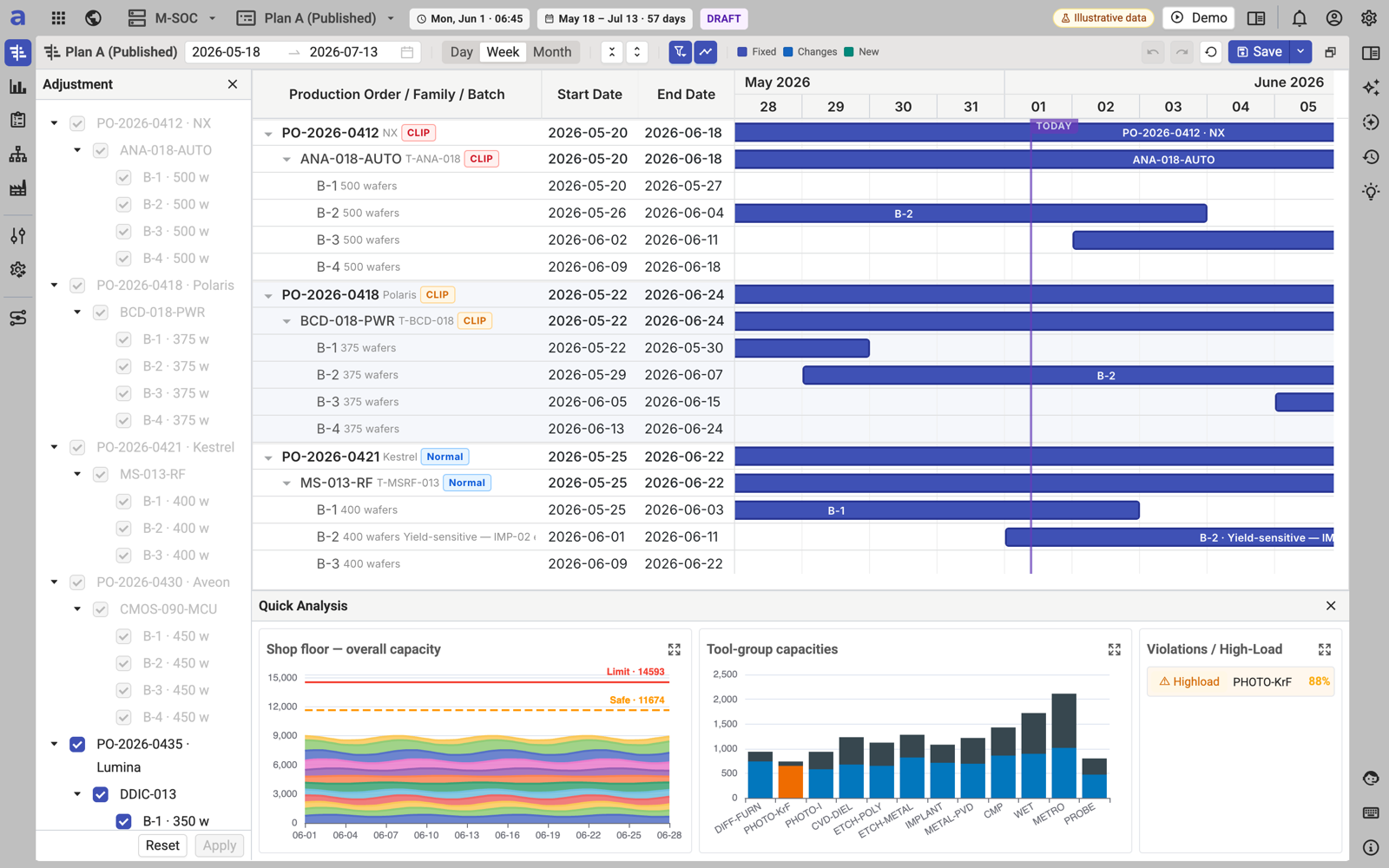
Scheduling turns the forecast into a plan the fab can actually run — with yield, qualification, batching and maintenance inside the solver, and every change explained.
Target figures are design targets from simulation on synthetic fab data. aPlanner has no customer deployments yet; first pilot results are expected in 2027.
What it is, what it solves, what it brings
What it is
A constraint-based optimizer across tools, materials, labor, maintenance and changeovers — yield-aware over 50–100+ wafer process steps — with automatic re-planning when a tool goes down, a yield hit lands or a hot lot arrives.
What problem it solves
Master-planning cycles take 3–5 days; roughly 70% of schedules need manual fixes; plans are outdated before they are finished; and the real constraints — qualification, batching, PM windows — live in planners’ heads.
What benefit it brings
Target: a full-fab schedule in under 30 minutes (80% faster); 99%+ feasible plans; bin-sort allocation that maximizes revenue per wafer; every change explained and approved by a planner.
From three candidates to one explained commit
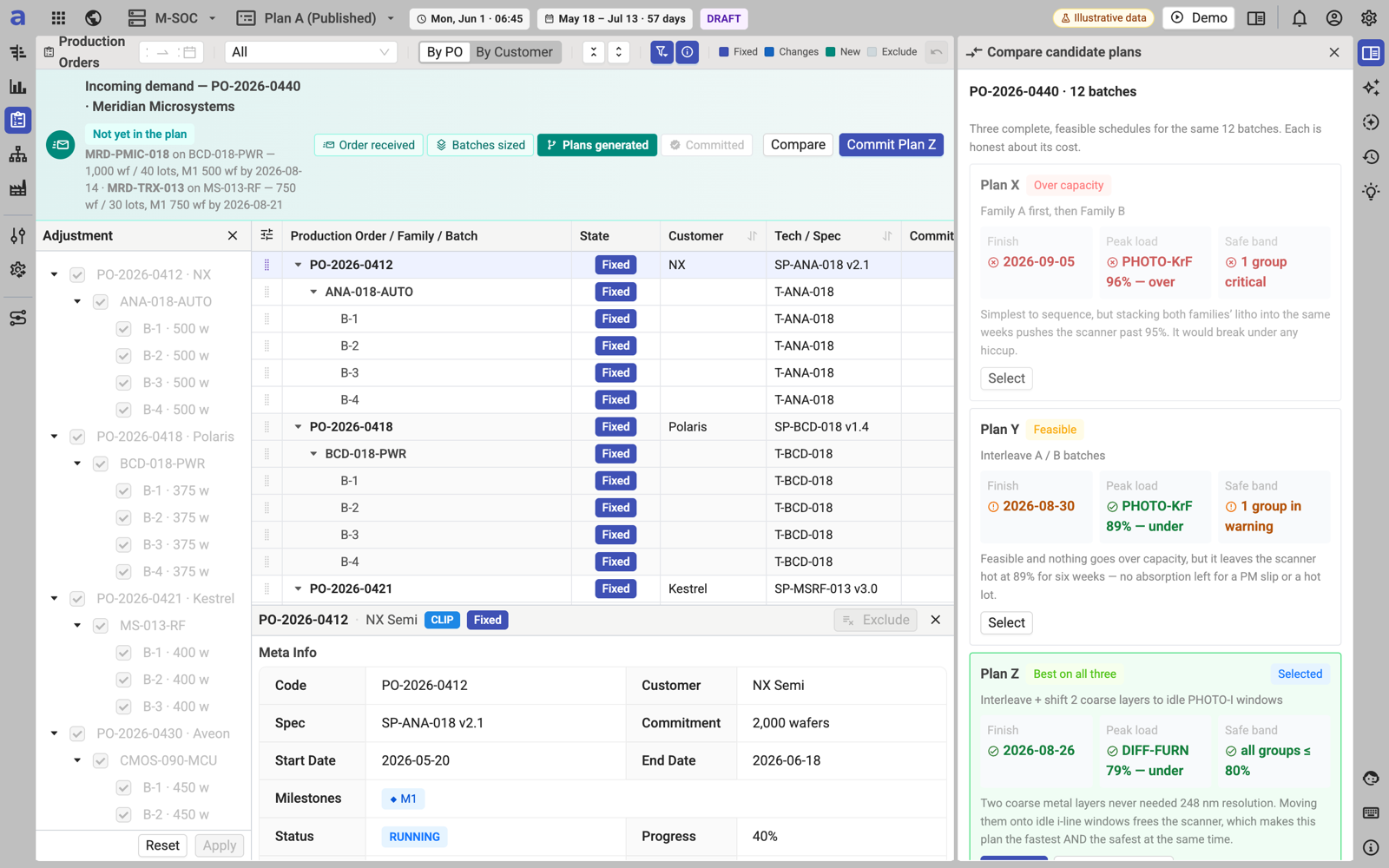
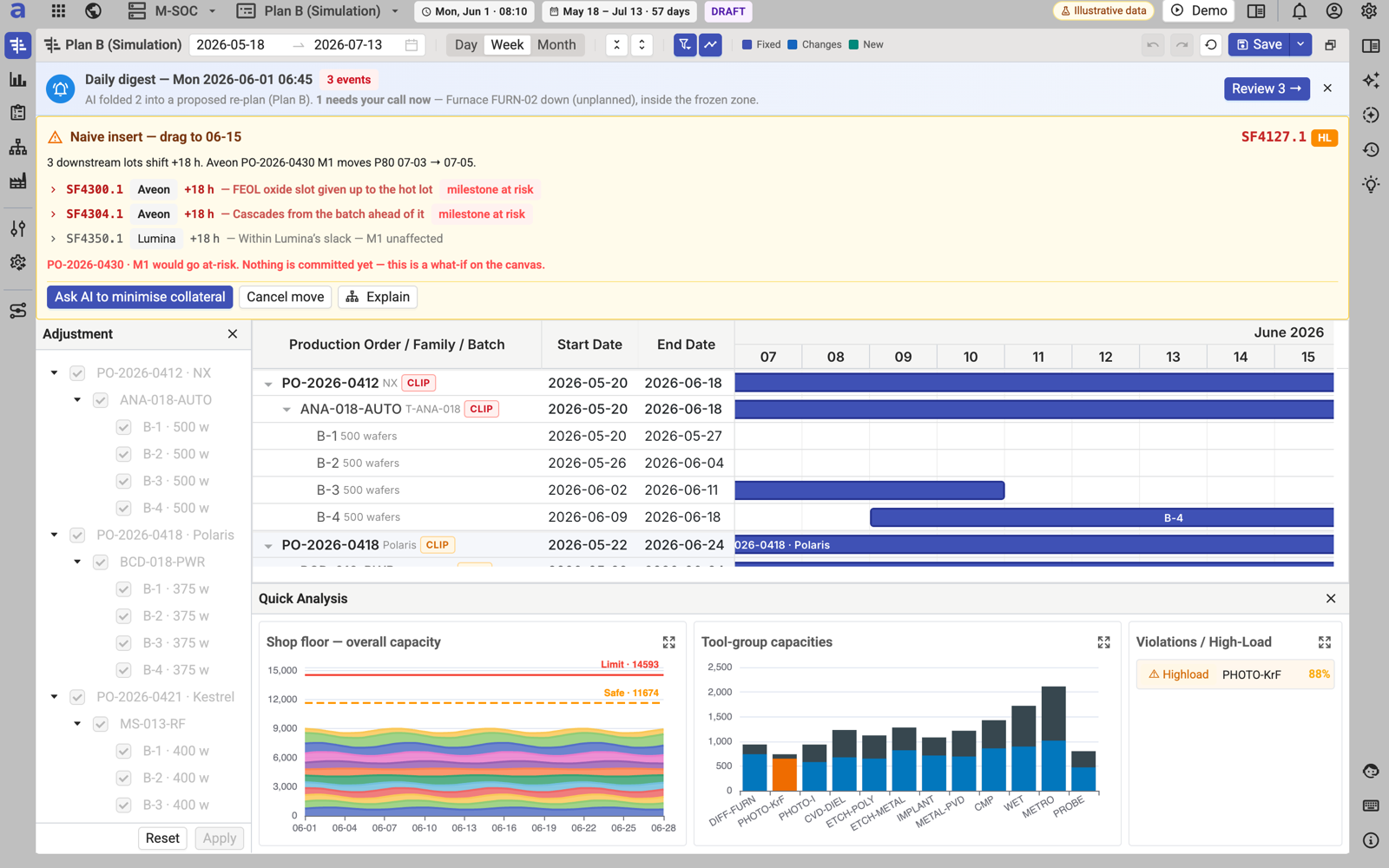
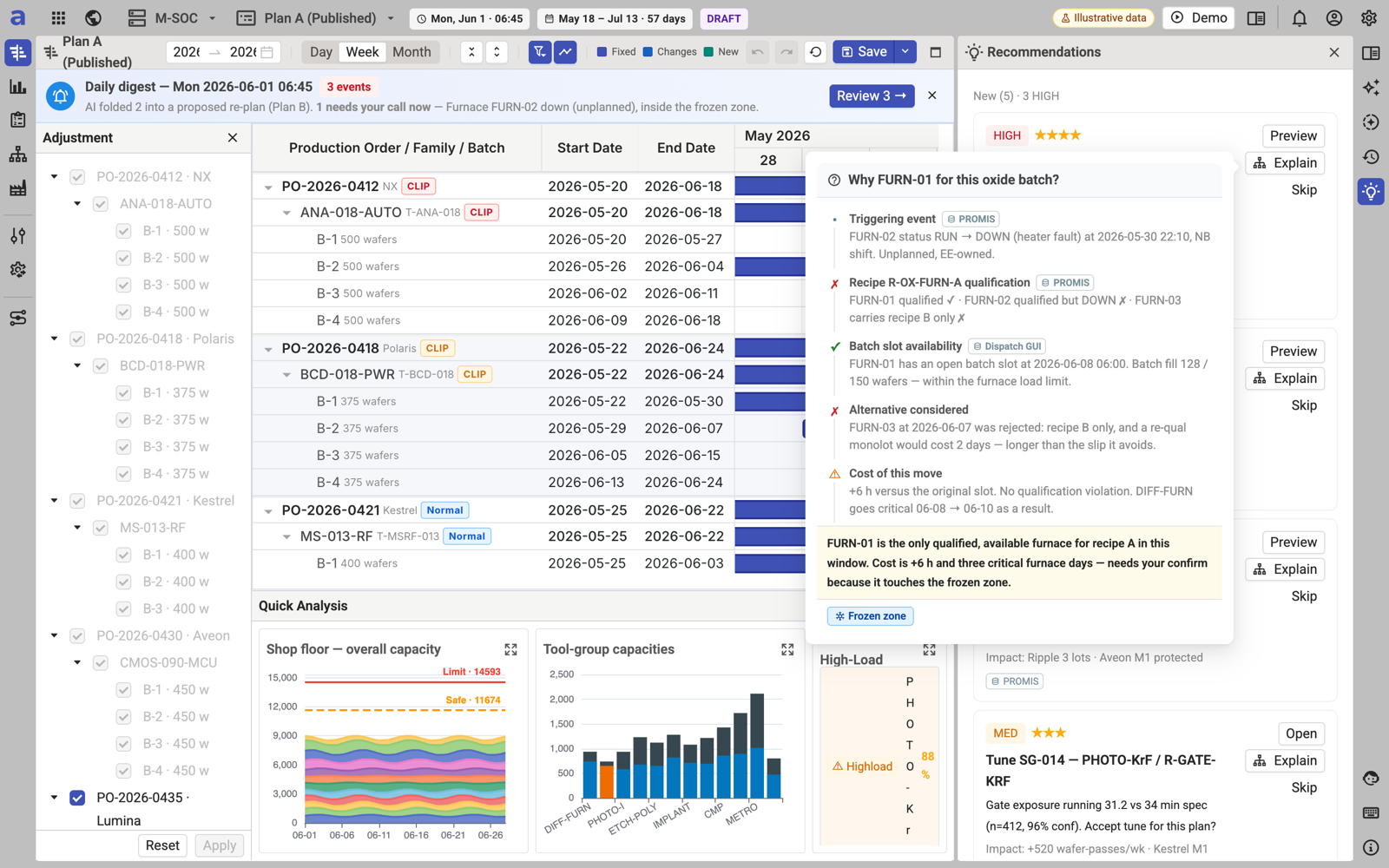
October 2026 MVP build on a synthetic fab dataset. Compare ranked candidate plans, drag a hot lot and watch the ripple, and open the constraint chain behind any change before you commit.
Capabilities
Schedules that respect the constraints a fab planner carries in their head today — so they hold when they hit the floor.
Yield-aware constraint scheduling
Live yield and bin distributions per step are inputs to the solver, so wafer starts, expected good die and bin mix are planned together.
Qualification, batching and PM inside the solver
Tool × recipe × chamber qualification, furnace batch sizes and maintenance windows are hard constraints, not afterthoughts.
Incremental re-planning with stability zones
Frozen / flex / far zones bound how much a plan may move; the solver warm-starts from the published plan so the floor is not whiplashed.
Priority and hot-lot management
Raise a lot to hot-lot priority, drag it on the Gantt and see the ripple live; ask the assistant for the minimum-collateral insertion.
Three ranked, feasible options
Every decision comes back as 2–3 solver-validated candidate plans with finish date, peak tool load and an all-safe check.
Bottleneck visibility
Tool-group load bands show where the next failure will hurt before it happens; the moving bottleneck is tracked per plan version.
Constraint types inside the solver
| Category | Examples |
|---|---|
| Capacity | Tool hours, chamber availability, effective capacity = theoretical × OEE × utilization target × yield |
| Qualification | Tool × recipe × chamber qualification tensor, dedication rules |
| Batching | Furnace and wet-bench batch sizes, batch-formation windows |
| Maintenance | PM windows, unplanned downs, recovery times |
| Yield | Yield and bin distributions per step, excursion holds, OCAP quarantine |
| Delivery | Customer due dates, hot lots, commitment risk at P50 / P80 / P95 |
| Stability | Frozen / flex / far zones, change penalties, planner approval |
| Sequence | Reentrant flows, setup minimization, product-family grouping |
Put the scheduler on one of your lines
The 2027 Korea pilot runs aPlanner read-only beside your current process on one production line for 8–12 weeks.