
Yield-aware, scenario-driven scheduling for multi-step wafer processes
The novelty is in combining three things that today live in three different heads: yield, constraints and scenarios. Two of the three are planned as KIPO patent applications.
Three innovations
Each card answers the same three questions: what it is, what advantages and benefits it brings, and how the IP is protected.
Yield-aware constraint scheduling
The optimizer takes live yield and bin distributions per process step as inputs, so wafer starts, expected good die and bin mix are planned together across 50–100+ steps — instead of scheduling starts and hoping the yield follows.
Node-migration planning
Models learning curves, ramp rates and capacity shifts when a line moves 176L → 236L → 300L+, planning old and new nodes as one system with shared tools and demand.
Explainable re-planning
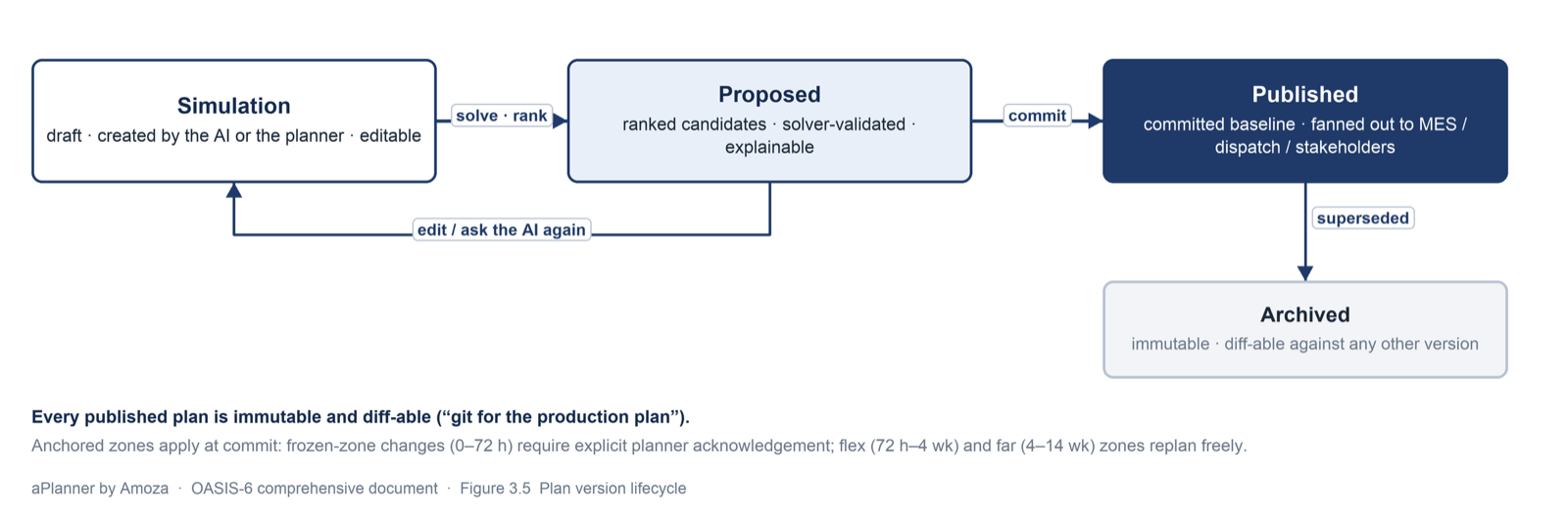
Every schedule change carries the triggering event, the constraints it hit and the KPI delta; frozen / flex / far zones bound how much the plan may move; the planner approves, edits or rejects in Korean or English.
Supporting technical novelties
The three headline innovations rest on a set of smaller engineering choices that make a fab plan both solvable and trustworthy.
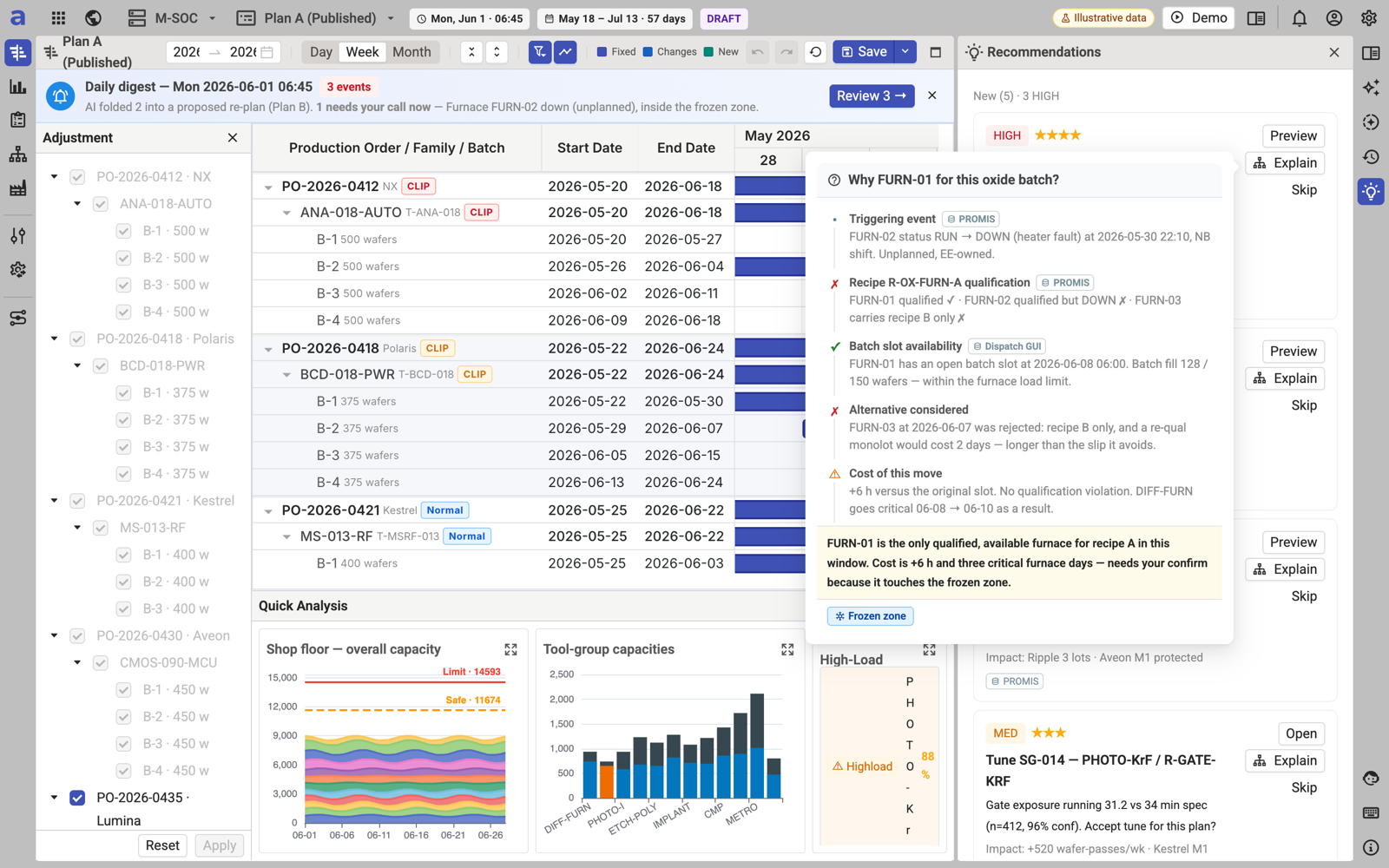
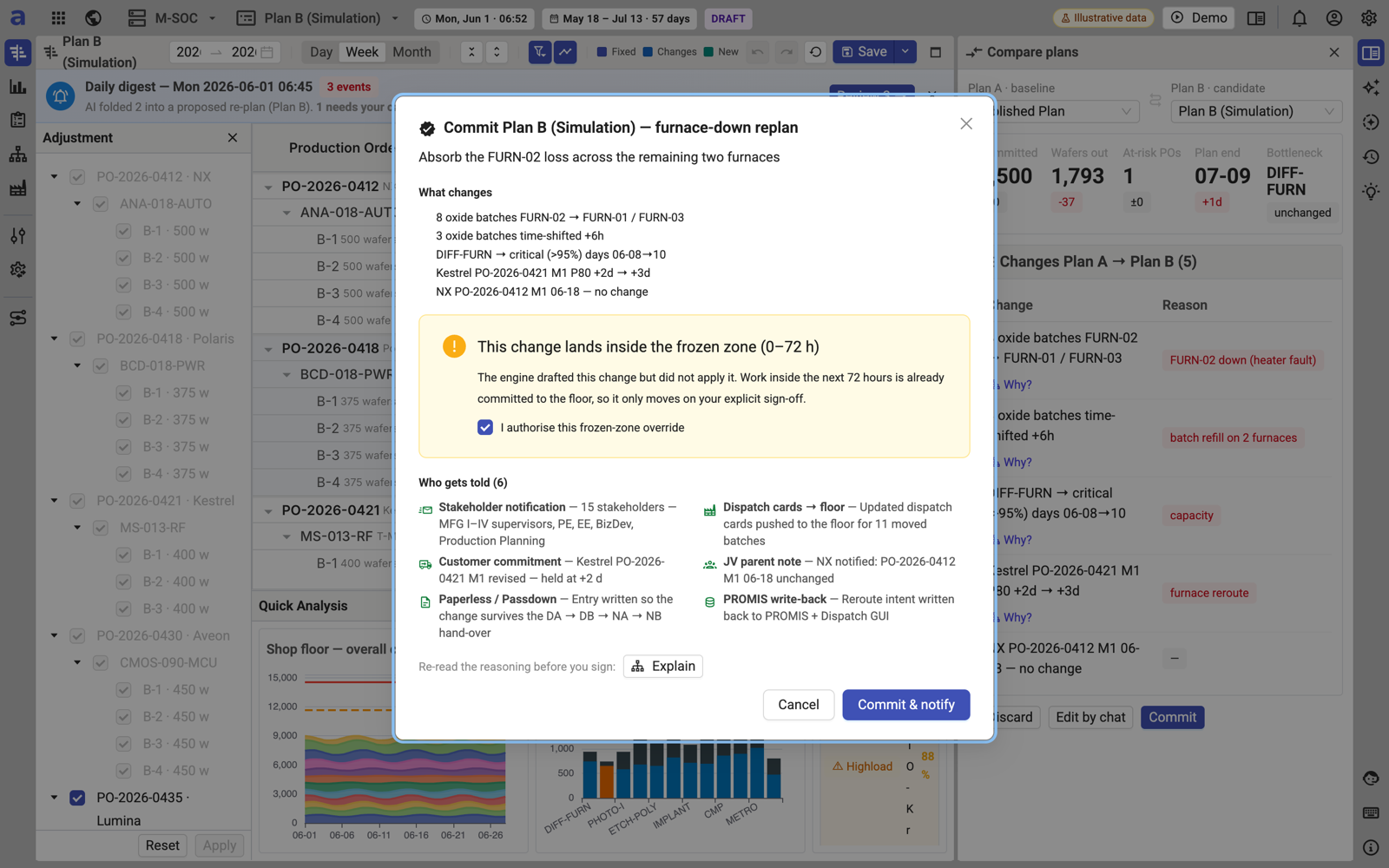
Explainable re-planning, as the planner sees it
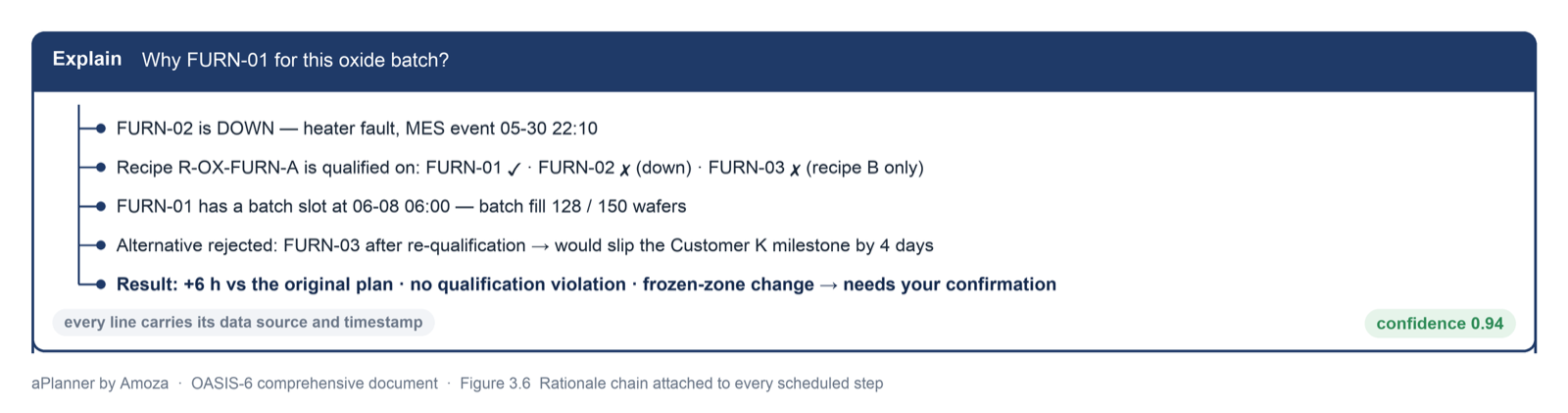
October 2026 MVP build on a synthetic fab dataset: the constraint chain behind a rerouted batch, and the frozen-zone acknowledgement that keeps the planner in control.
Development stage
Not commercialized; no revenue; no customers yet. Working prototypes of scheduling, simulation and analytics on synthetic fab data; forecasting engine prototyped, dedicated view in the December 2026 build.
Phase 1 — Foundation
Phase 2 — Concept
Working prototypes on synthetic fab data
Phase 3 — Validate
MVP validation, Korean UI
Phase 4 — Launch prep
Validate the innovations on your line
The first Korean fab pilot in 2027 is where these targets become measured results.