
One planner’s week with the aPlanner MVP
Eight use cases captured from the October 2026 MVP build on a synthetic single-module fab dataset. The same engine, data model and screens apply unchanged to a 300-layer NAND fab.
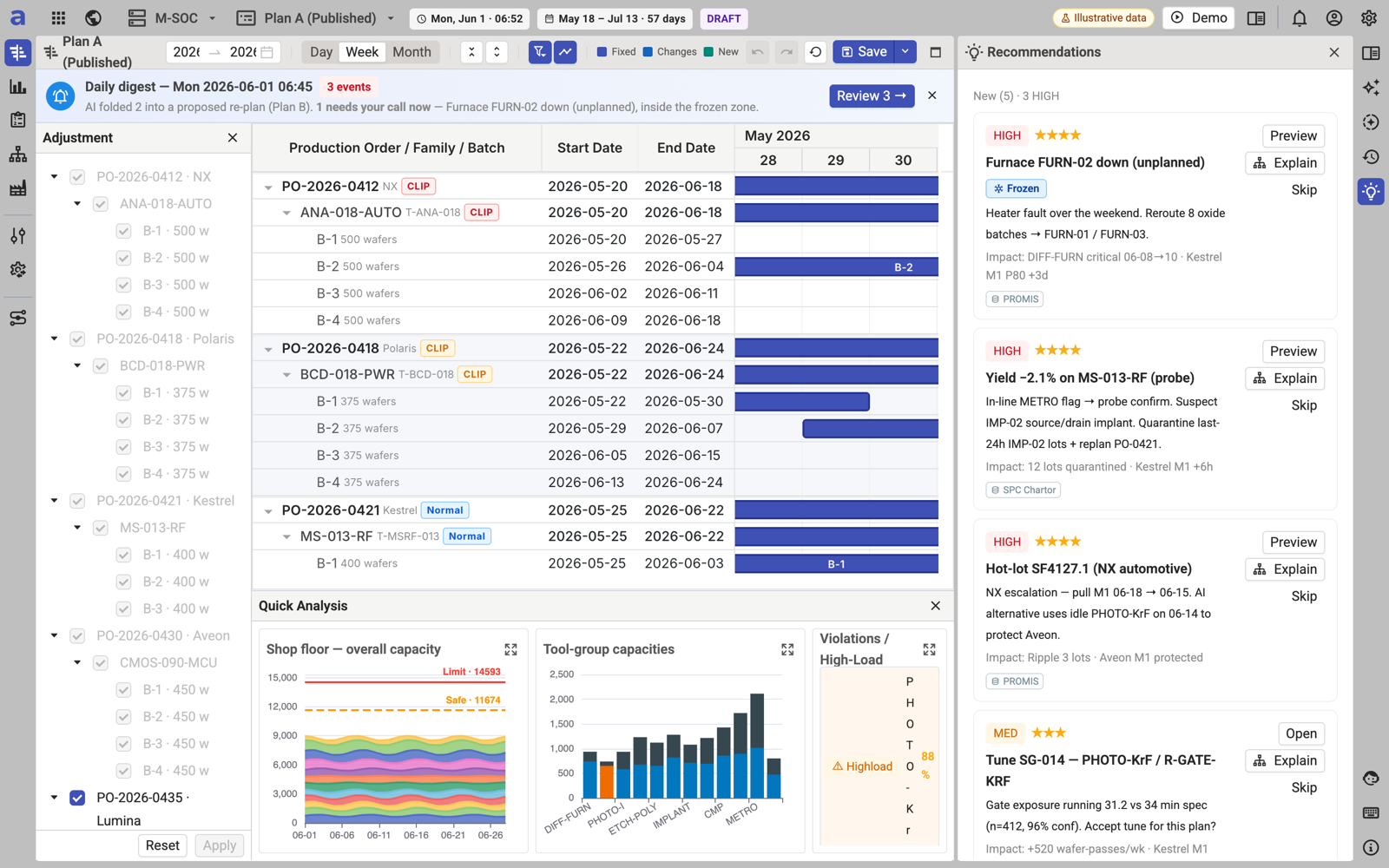
Left rail of views, Gantt canvas, AI assistant on the right
Main views: Gantt (simulation), Production Order, Shop Floor Capacity, Analysis, Process Tuning, Change History. Right panels: Daily Digest, Recommendations, Compare / Split, Explain, AI Assistant. Every recommendation can be previewed, explained, edited and committed — AI recommends, people decide.
English UI in these captures; the Korean UI is part of Phase 3 (Oct–Dec 2026).
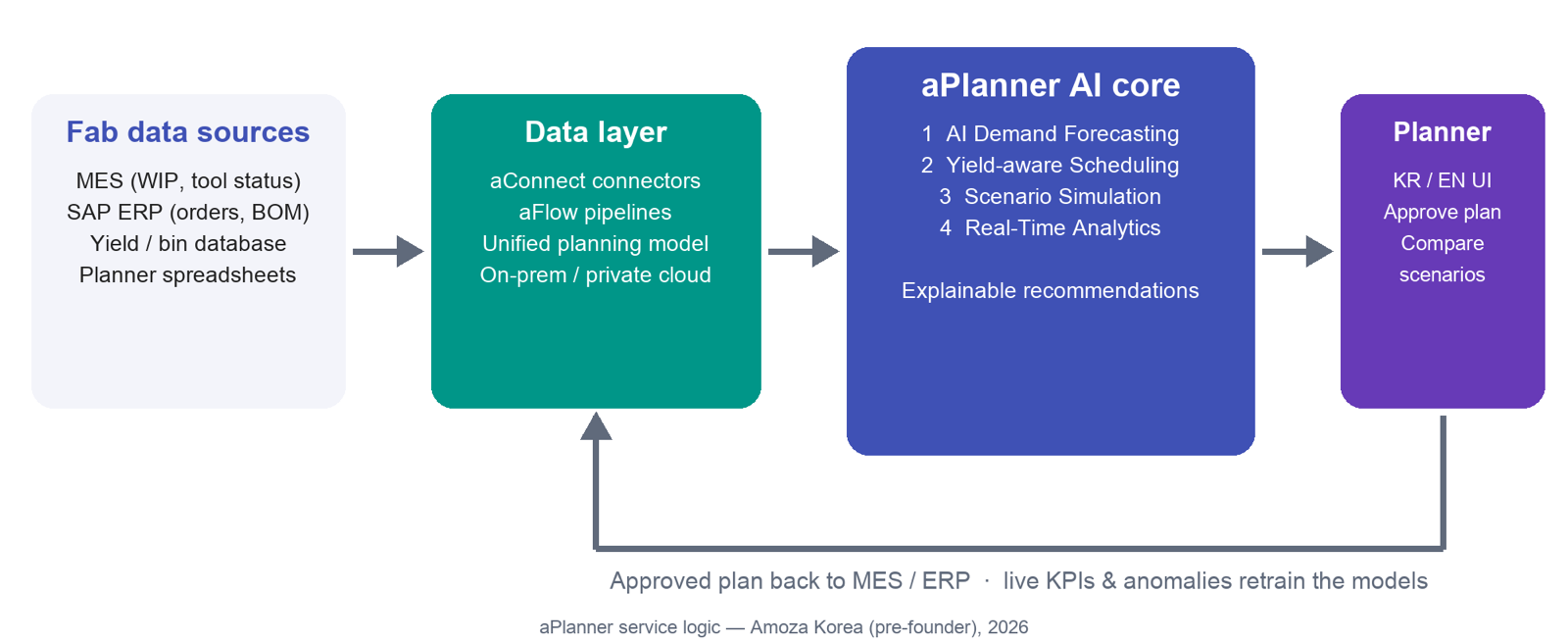
Trigger → flow → screens → what happens under the hood
Click any screen to enlarge. The use cases follow one planner’s week, from Monday’s digest to the operations review.
Absorb an unplanned equipment failure with the smallest, most defensible change to the plan, and tell everyone affected automatically.
Saturday 22:10 a furnace fails; over the weekend a yield hit and a hot-lot escalation also arrive.
The event router classified the furnace event HIGH × local × frozen zone and held it for confirmation; the incremental solver warm-started from Plan A with a stability penalty; the Monte-Carlo wrap recomputed P80 on the milestone.
A 2–3-hour manual rebuild becomes a ~6-minute explainable commit (target); nobody is e-mailed by hand.
NAND variant: Replace the furnace with a HARC etch chamber failure: 12 lots reroute to two other qualified tools and the engine shows which QLC commitments are exposed at P80.
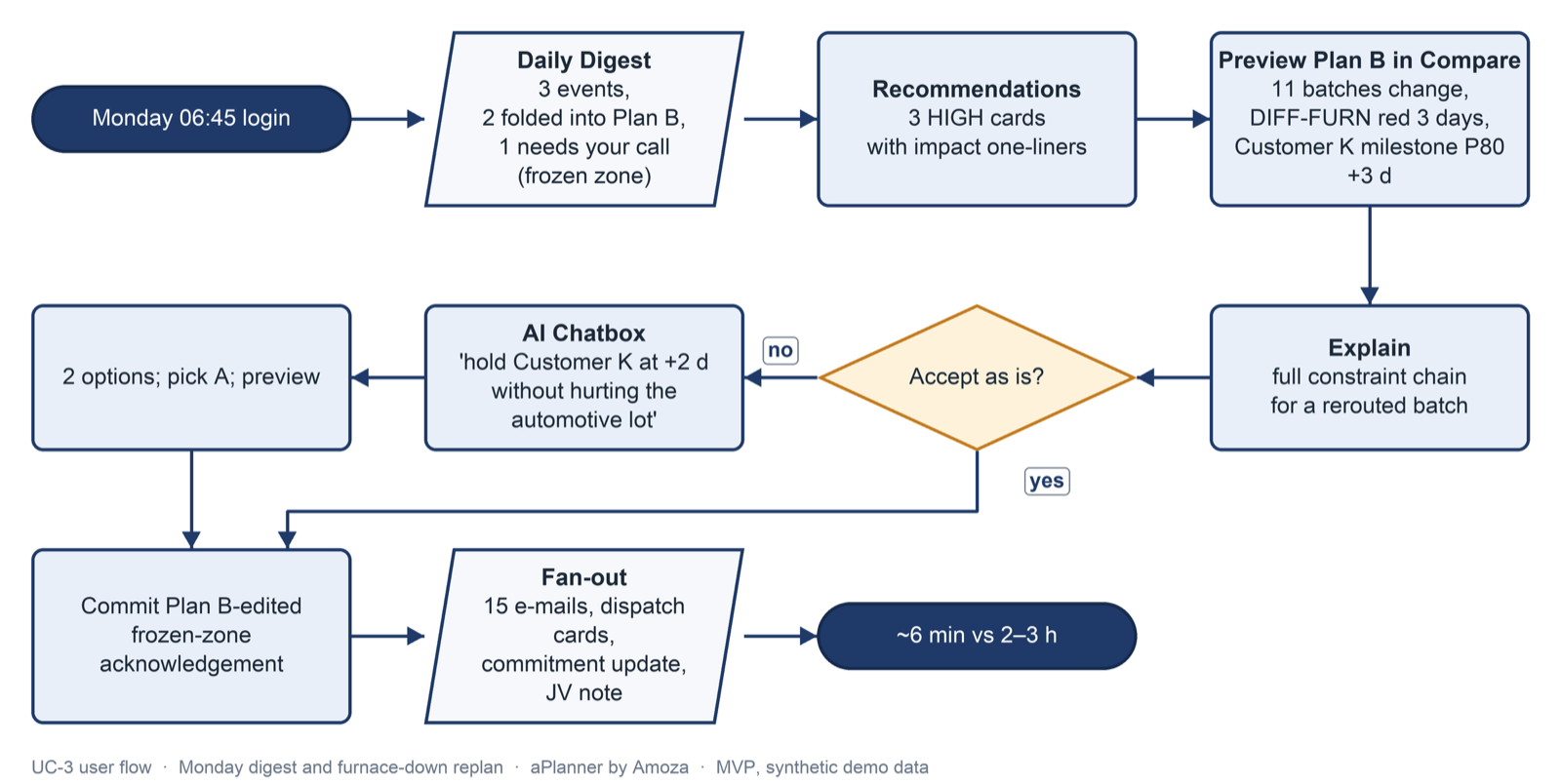
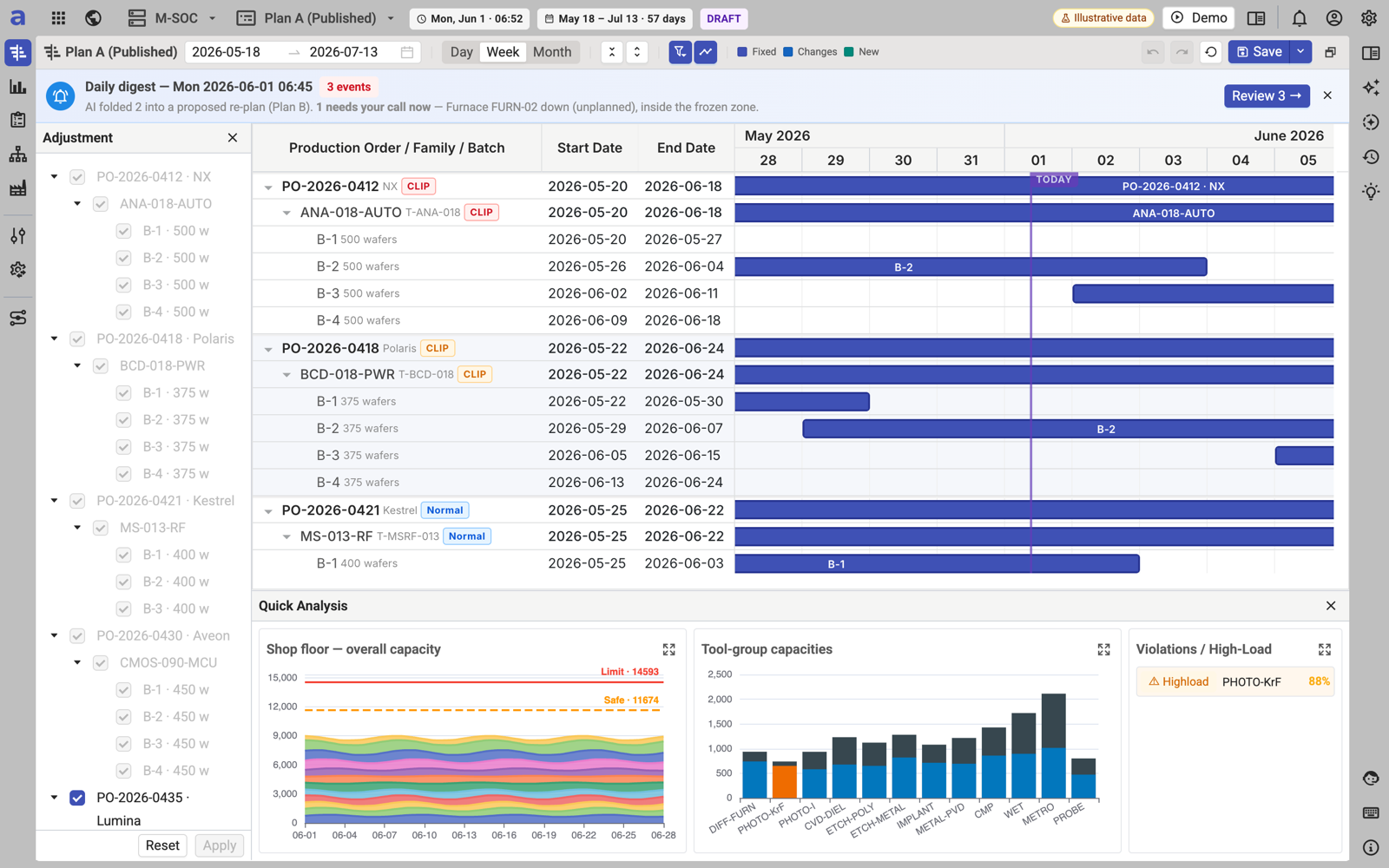
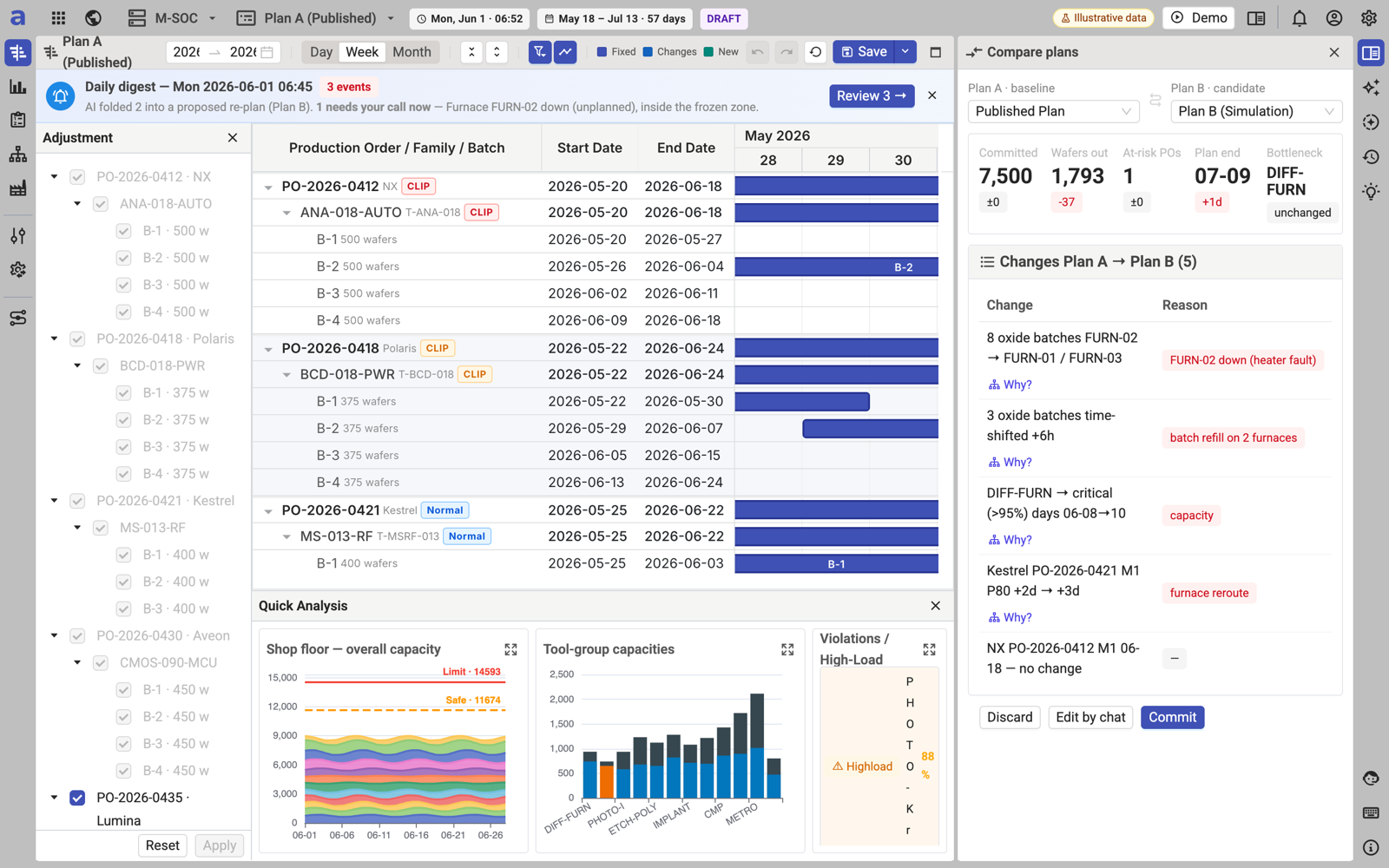
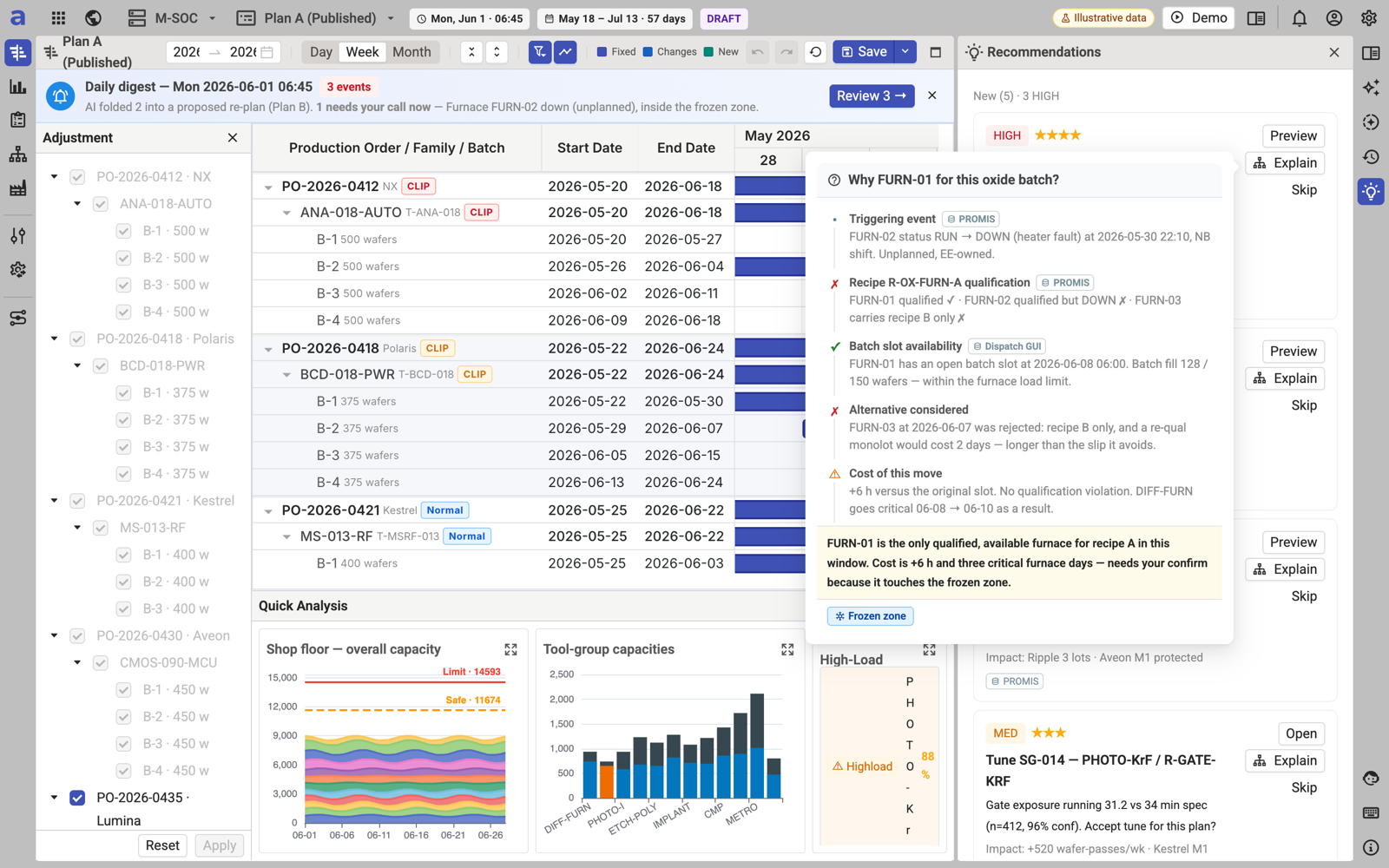
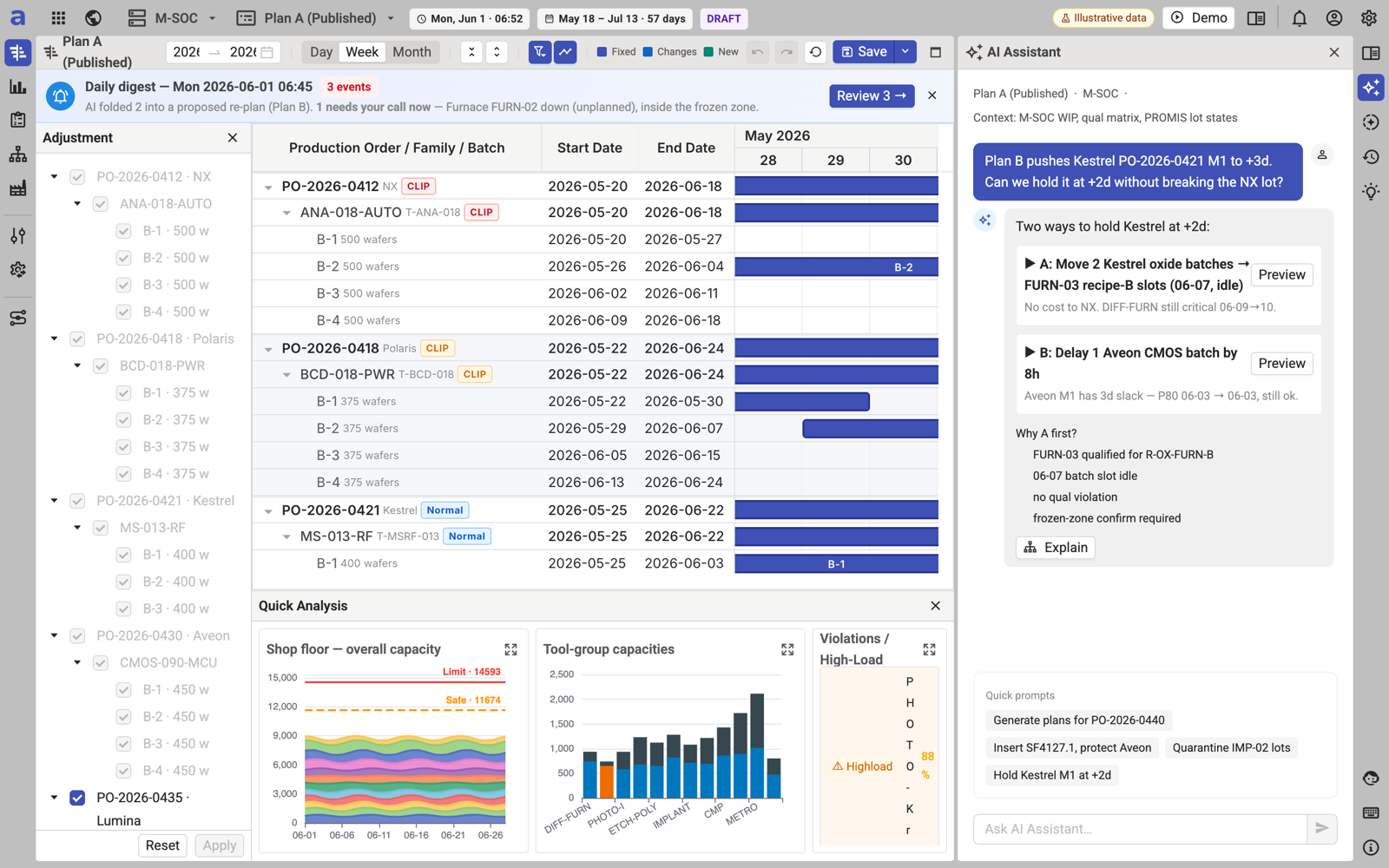
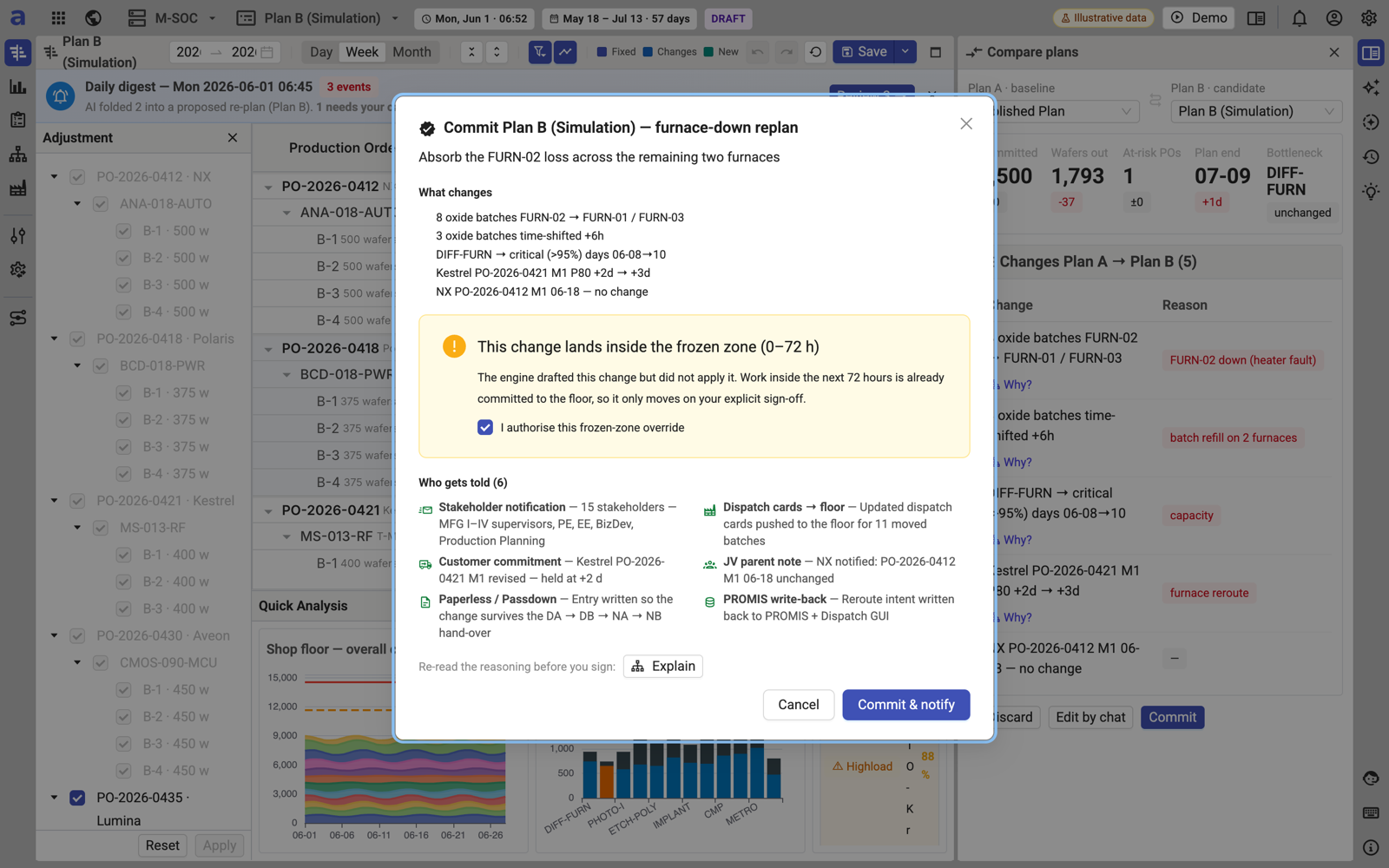
A 3-hour Excel rebuild becomes a 6-minute explainable commit
On the easy case — a single-module foundry — that is the target. The same engine scales to the hardest NAND fab. If it wins here, it wins everywhere.
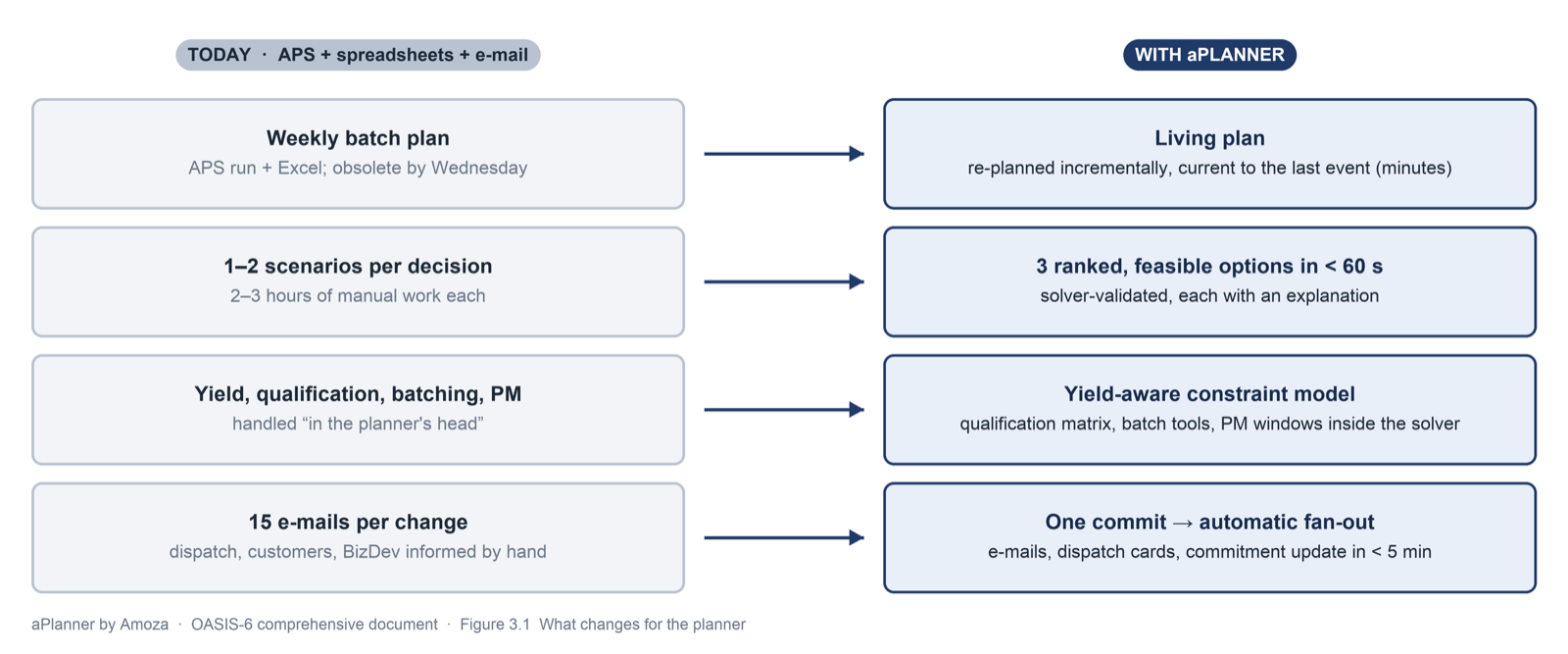
Target figures are design targets from simulation on synthetic fab data. aPlanner has no customer deployments yet; first pilot results are expected in 2027.
Want to see it on your own line?
The 2027 design-partner program puts the MVP on one production line of a Korean fab, OSAT or supplier — after a paid readiness assessment, with your planners, inside your network.