
Legacy APS is generic, slow and bolted-on AI. aPlanner is built for the fab.
Five reasons a Korean fab should pilot aPlanner in 2027 — stated as design targets, not as a track record. There are no customer deployments yet.
Five reasons to pilot aPlanner
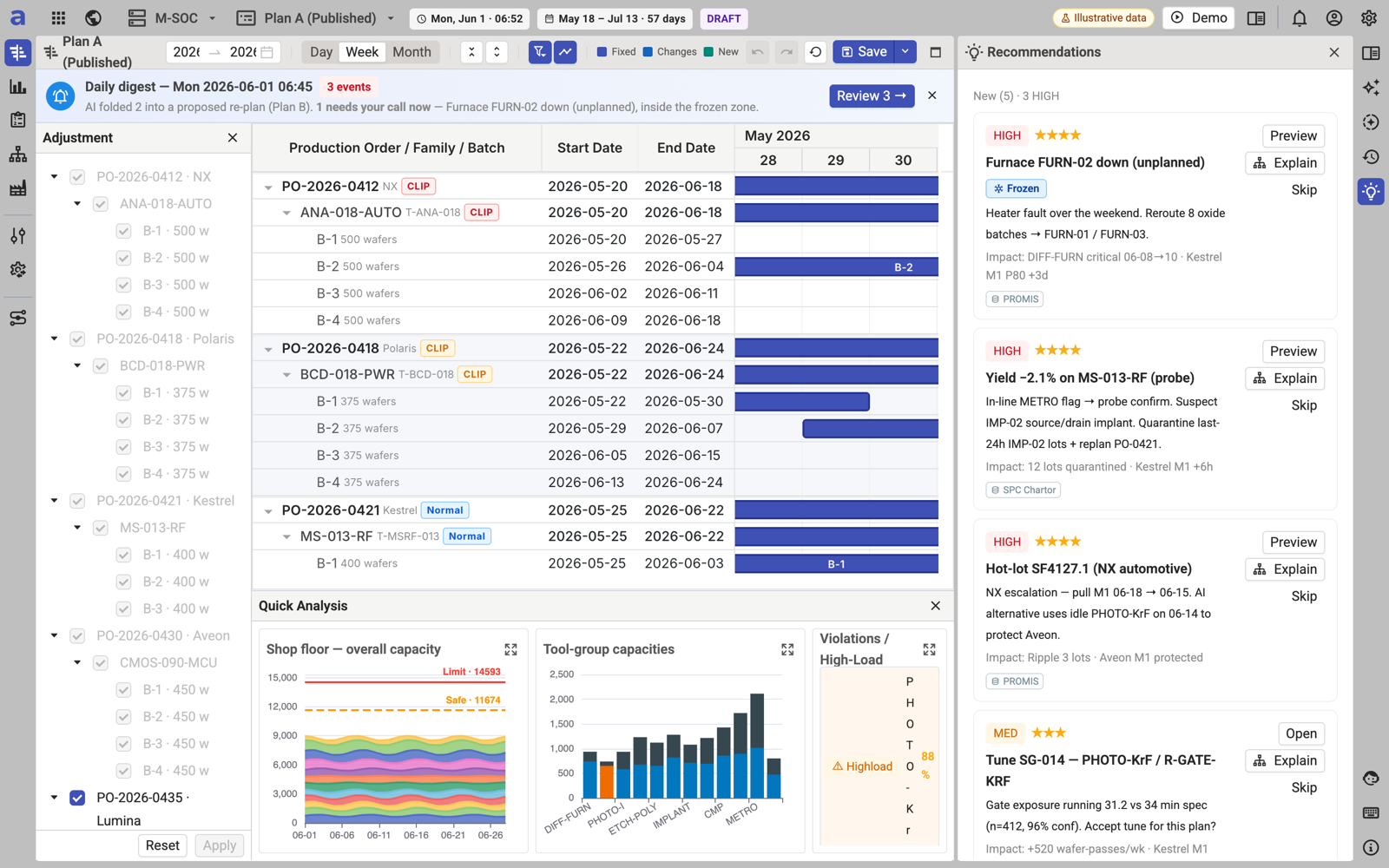
Industry-specific AI, not generic algorithms
Legacy APS is generic and its AI is an add-on; the AI-first vendors were built for consumer supply chains. Neither was designed for yield curves and node transitions.
aPlanner models what makes a fab a fab, inside the solver:
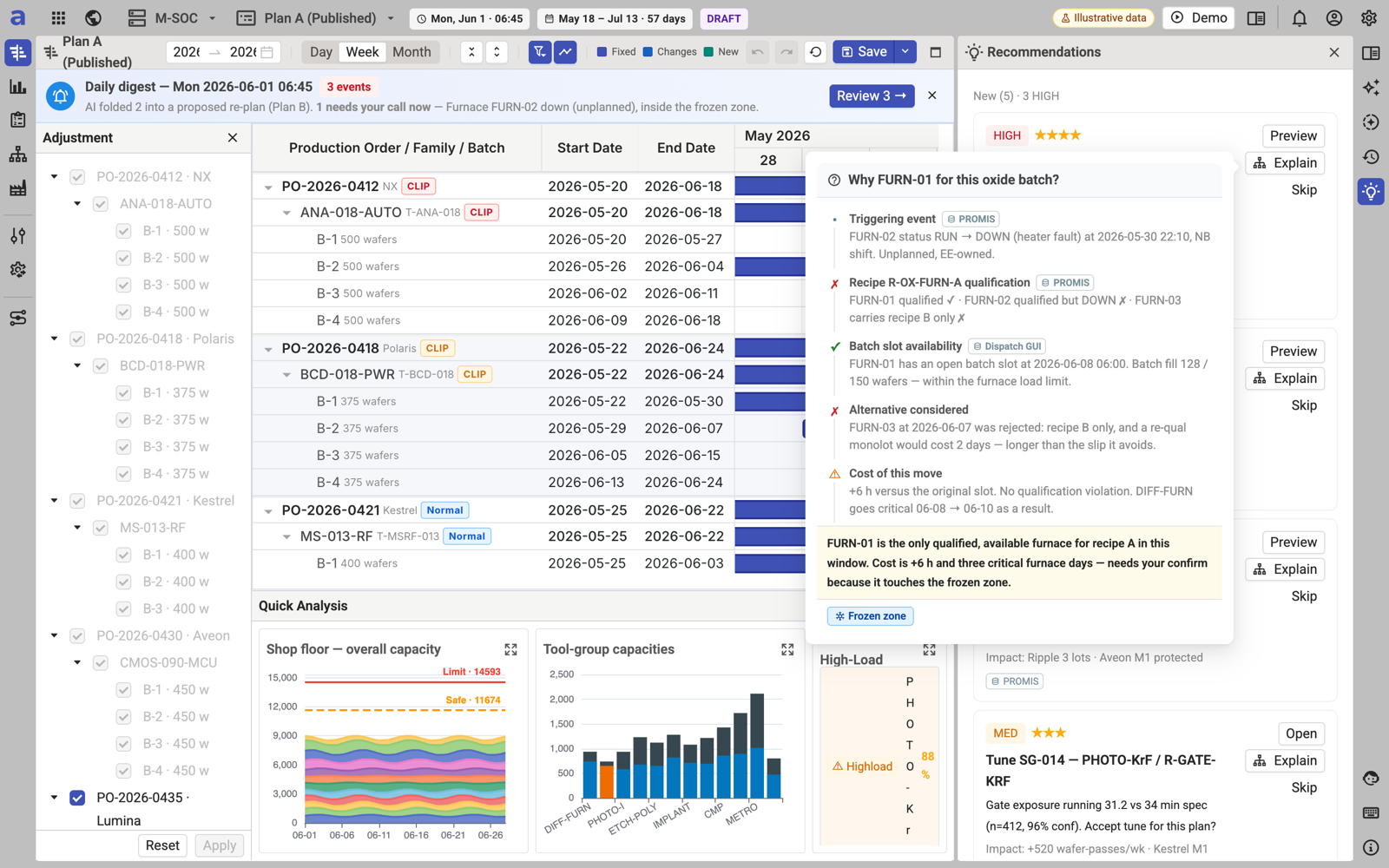
Designed for first value in 8–12 weeks, not 12–18 months
Incumbents need 12–18 months of system-integrator customization before a fab sees a plan. That is a year and a half before any return, and most projects that long never deliver the promised value.
aPlanner is designed to deliver first value in 8–12 weeks (target). How?
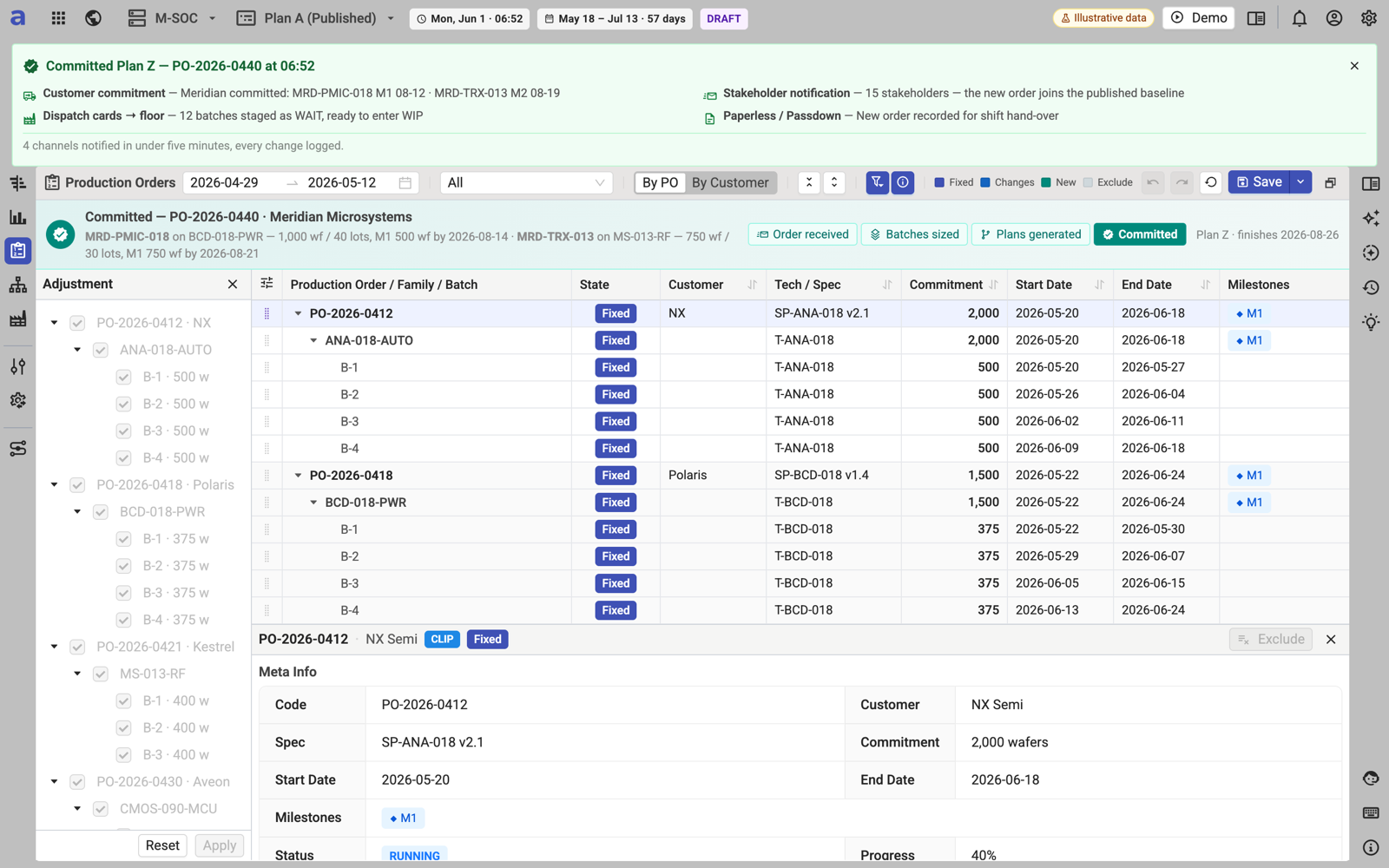
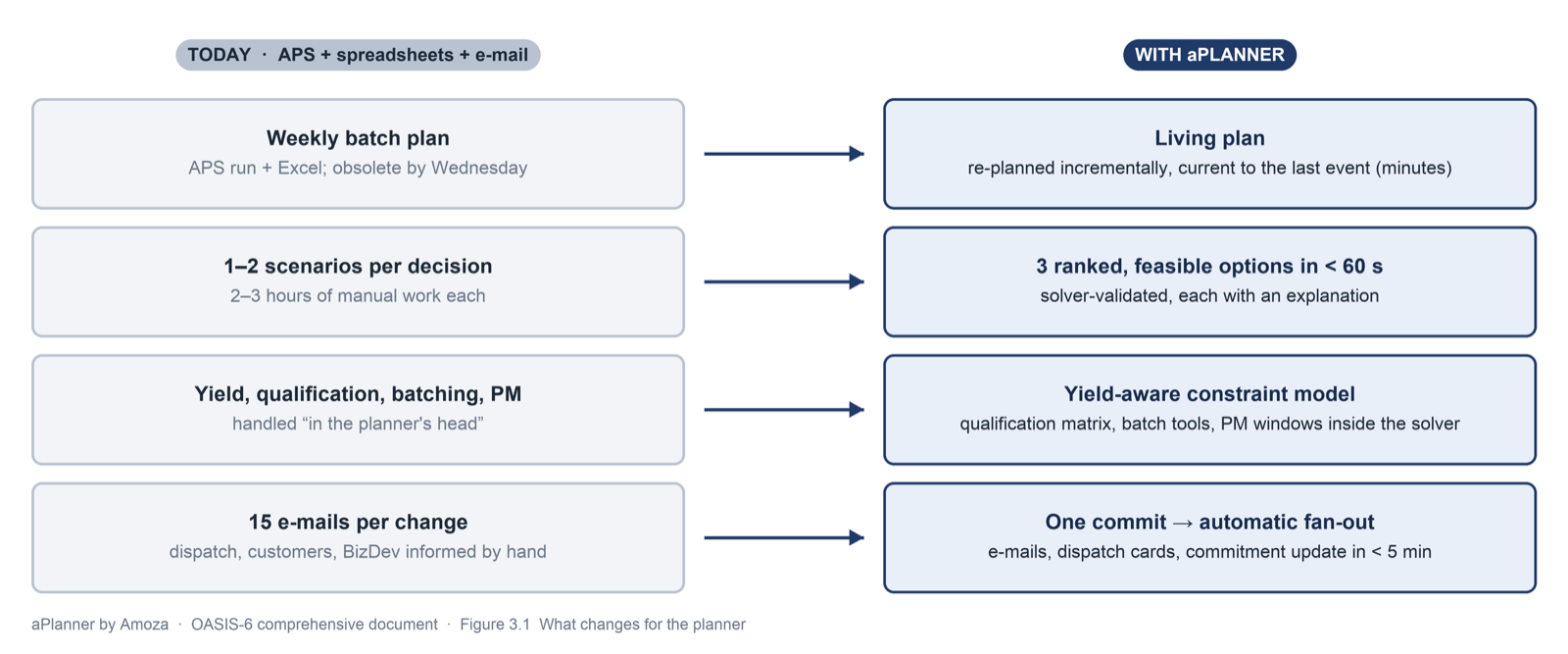
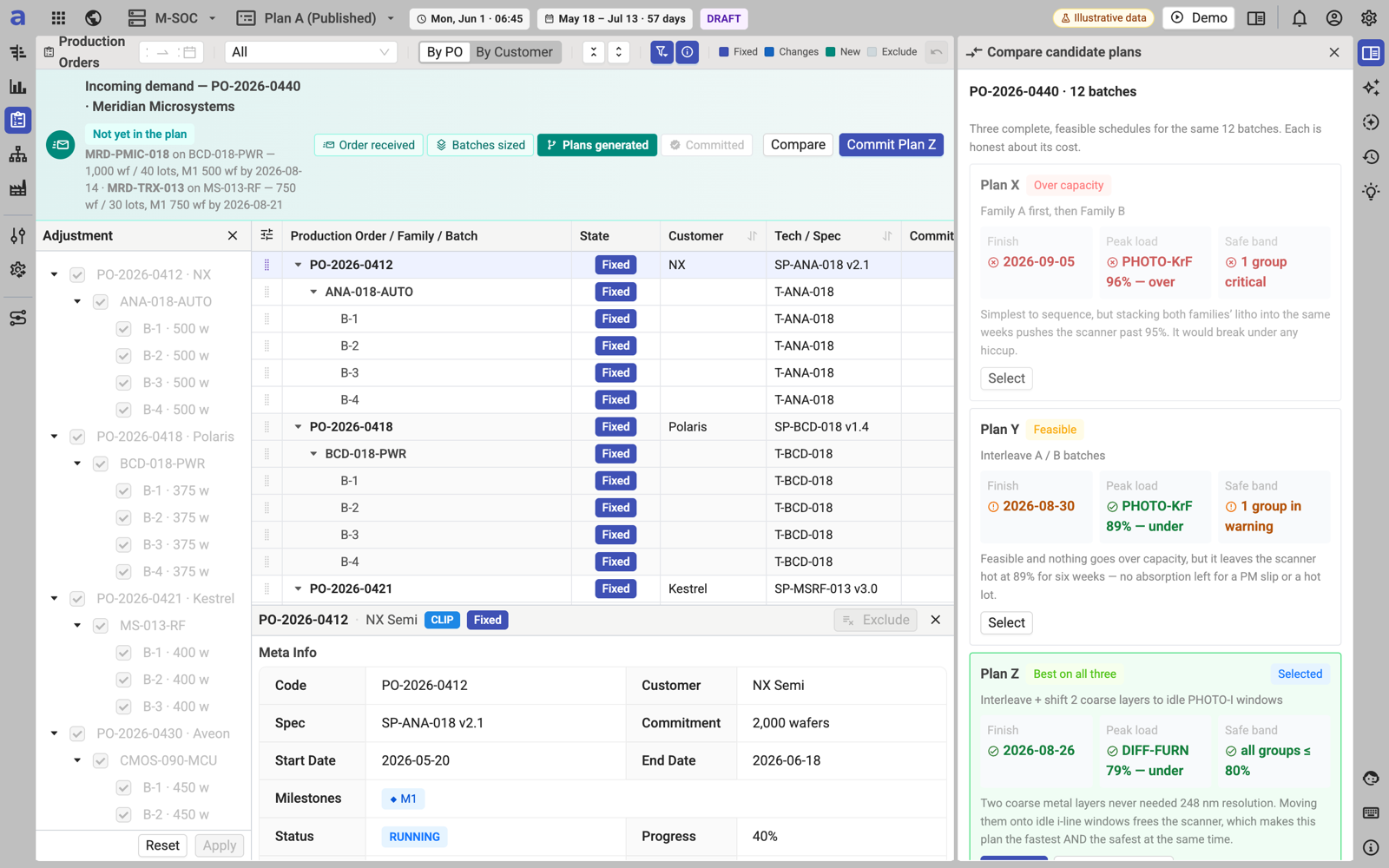
Scenarios in minutes, every option solver-validated
A scenario takes hours to days in legacy APS and in Excel, so planners test one or two options and decide by gut feel.
aPlanner’s simulation engine is built for the question "what if":
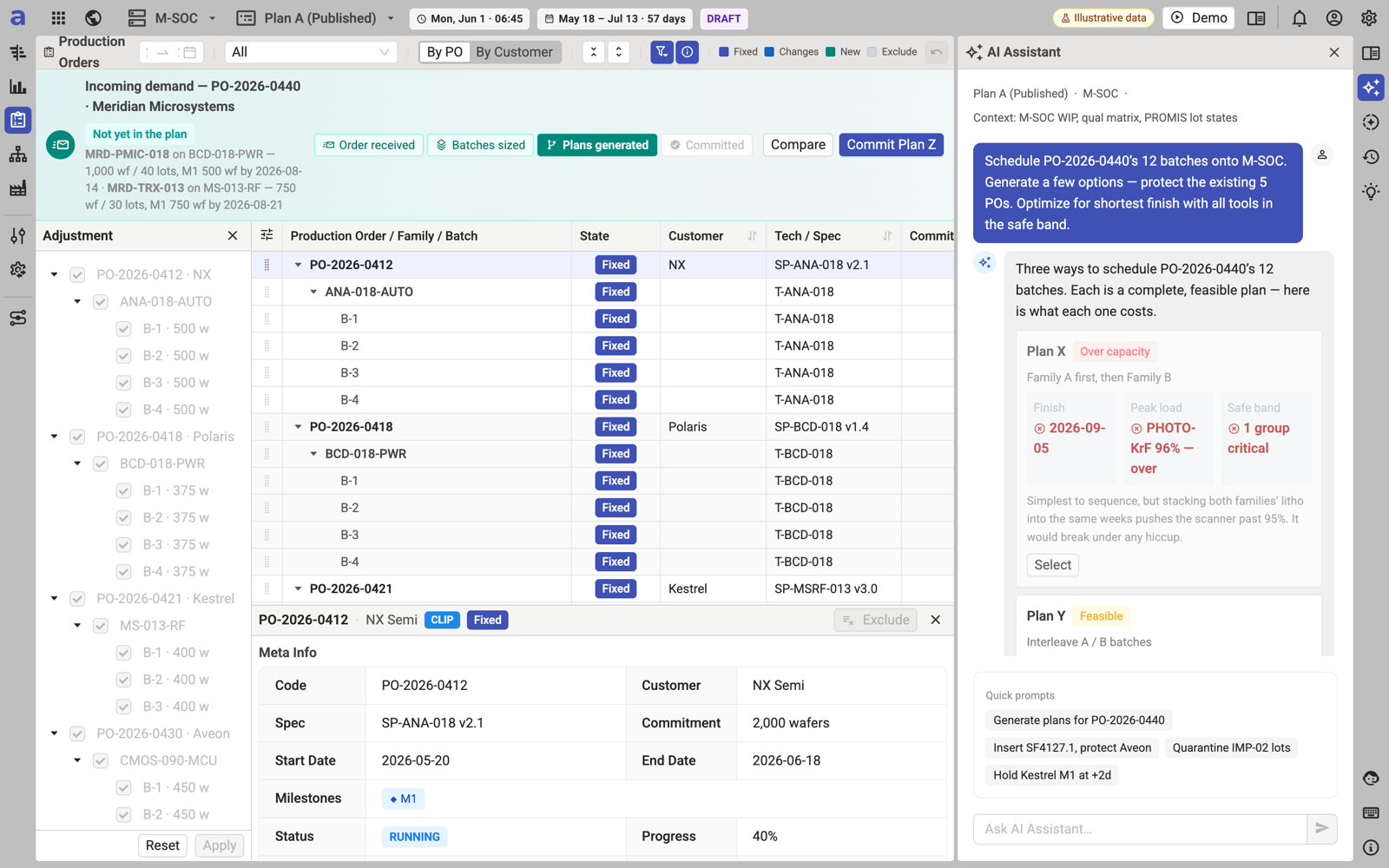
Data stays in the fab
Korean fabs reject off-site production data. Cloud-first SAP IBP, o9 and Kinaxis stall in the security review before the first workshop.
aPlanner clears the #1 objection on day one:
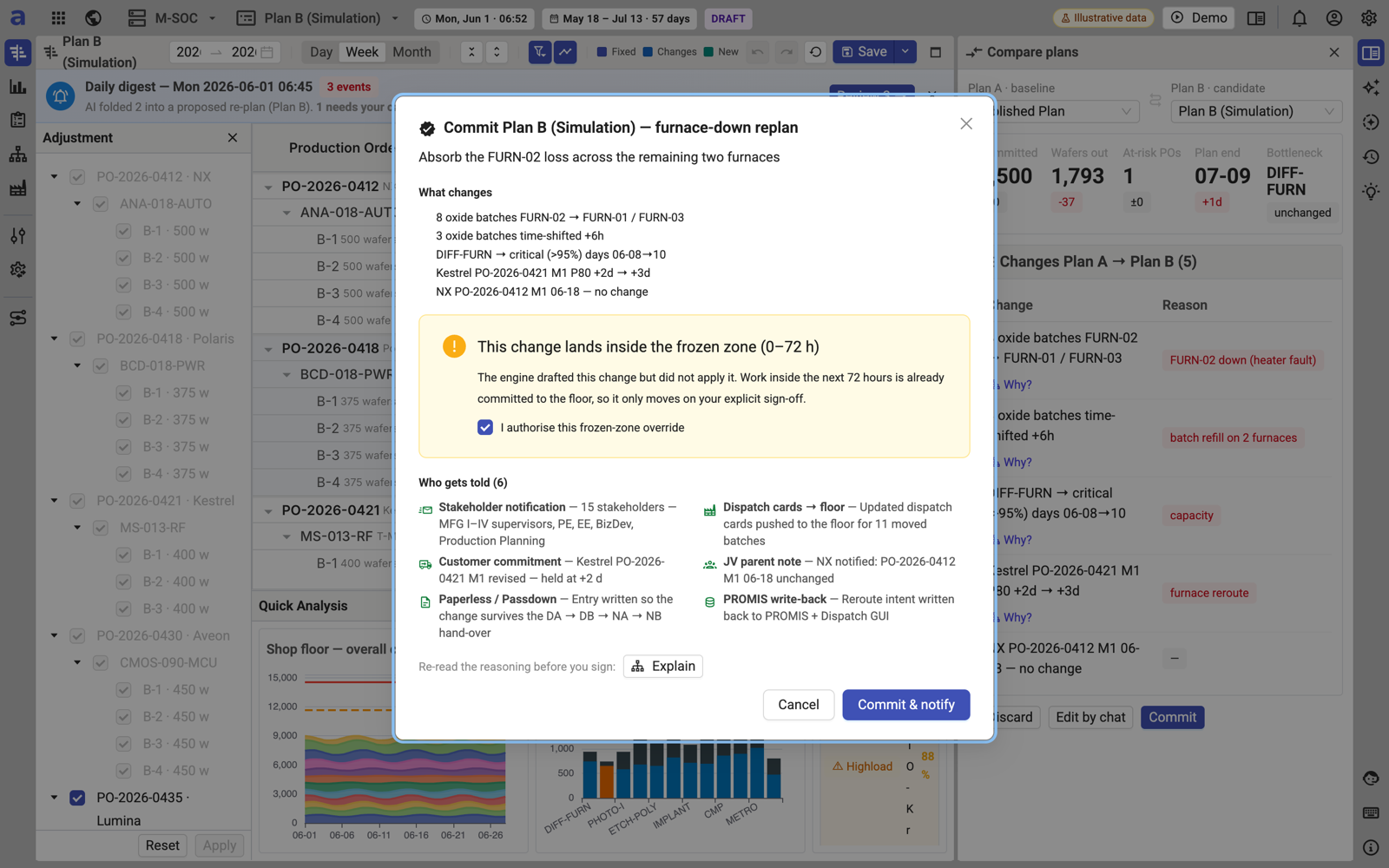
Korean users, Korean support, KRW entry price
Overseas vendors support in English from another time zone, price in US dollars and start at US$250–500K+ a year.
aPlanner sits next to the planner, in Korean:
The business case — as targets
The waste is real and large; the gains are design targets until a Korean fab pilot measures them in 2027. We publish targets, not customer results we do not have.
Where the value is designed to come from
Target figures are design targets from simulation on synthetic fab data. aPlanner has no customer deployments yet; first pilot results are expected in 2027.
Legacy APS vs. AI-first supply-chain tools vs. aPlanner
Public positioning of the incumbents as understood in October 2026; aPlanner column states design targets.
| SAP IBP / Oracle APS | Kinaxis / o9 / Blue Yonder | aPlanner | |
|---|---|---|---|
| AI | Bolt-on | Partial / generic | AI-native |
| Semiconductor depth | Generic | Automotive / supply-chain focus | NAND- / fab-specific models |
| Deployment | 12–18 months | 4–12 months | 8–12 weeks (target) |
| Scenario speed | Hours–days | Hours | Minutes (target) |
| Entry price | US$400–500K+/yr | US$250–300K+/yr | KRW 120–300M/yr (≈ US$100–250K) |
| Korean-fab data residency | Cloud-first | Cloud-first | On-prem / private cloud option |
| Korean UI & support | Partner-dependent | English, other time zone | Korean UI, team near the cluster |
Deployment and security for Korean fabs
On-premise / private cloud first for Korean fabs; AWS Seoul region for SaaS. Honest status: what is in the MVP today, and what is on the roadmap.
On-prem / private cloud
Design default for Korean fabs
Encryption, RBAC, SSO, audit trail
In the MVP
SOC 2 Type II
Planned 2027–28
ISO 27001 · K-ISMS
Planned 2028 · planned
Deployment
Governance
Roadmap
A design partner, not a vendor
The first Korean fabs will not be customers of a finished product; they will be design partners of a founder-led company. That is how we will behave.
We succeed when you succeed
Assessment first, pilot second, subscription only when the pilot proves value on your own data. Renewals depend on delivering it — that is the whole business model.
Building for years, not quarters
Amoza Korea is being founded to put AI planning into Korean fabs and stay there. The roadmap is driven by the planners we sit next to, not by exit timelines.
No hidden agendas
We tell you what the MVP can do, what it cannot yet, and what is on the roadmap. Every number on this site is labelled a target. We would rather have hard conversations than broken trust.
Judge it on your own line in 2027
A planning readiness assessment (KRW 50–100M, 2–4 weeks) followed by a pilot on one line (KRW 75–150M, 8–12 weeks). Then decide.