
Predict demand with confidence intervals
Forecasting tells the fab what the market will want — per bit-density tier, per generation, with the uncertainty made explicit so the schedule can plan for it.
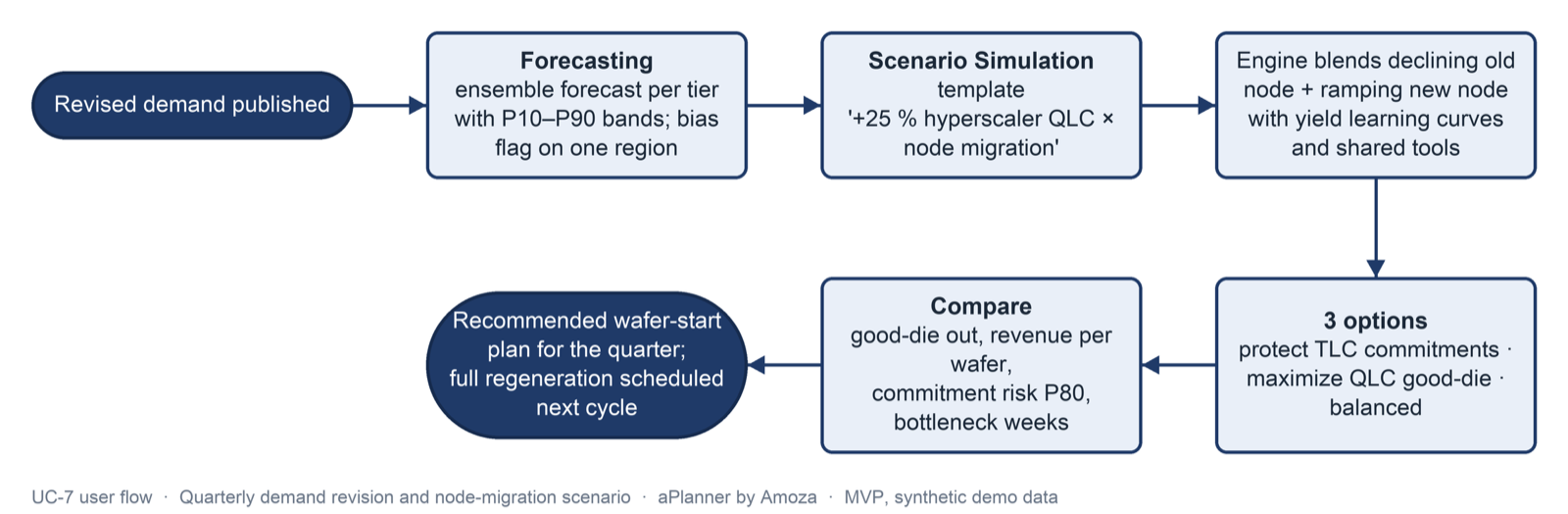
Target figures are design targets from simulation on synthetic fab data. aPlanner has no customer deployments yet; first pilot results are expected in 2027.
What it is, what it solves, what it brings
What it is
Ensemble machine learning (LSTM, Prophet, XGBoost, Transformer) forecasting demand per bit-density tier / SKU, from 1 day to 24 months, with confidence intervals. The best model per segment is chosen automatically and retrained as data arrives.
What problem it solves
Excel forecasts reach 55–65% accuracy, which turns into over- and under-production worth US$20–50M a year per large fab. AI / data-center orders swing 30%+ within a quarter, and spreadsheets see it weeks too late.
What benefit it brings
Target 85–90% accuracy (+20–30 points); less inventory in the wrong place; demand sensing that catches hyperscaler swings weeks earlier. All figures are design targets until the first Korean pilot reports.
Where the forecast meets the plan
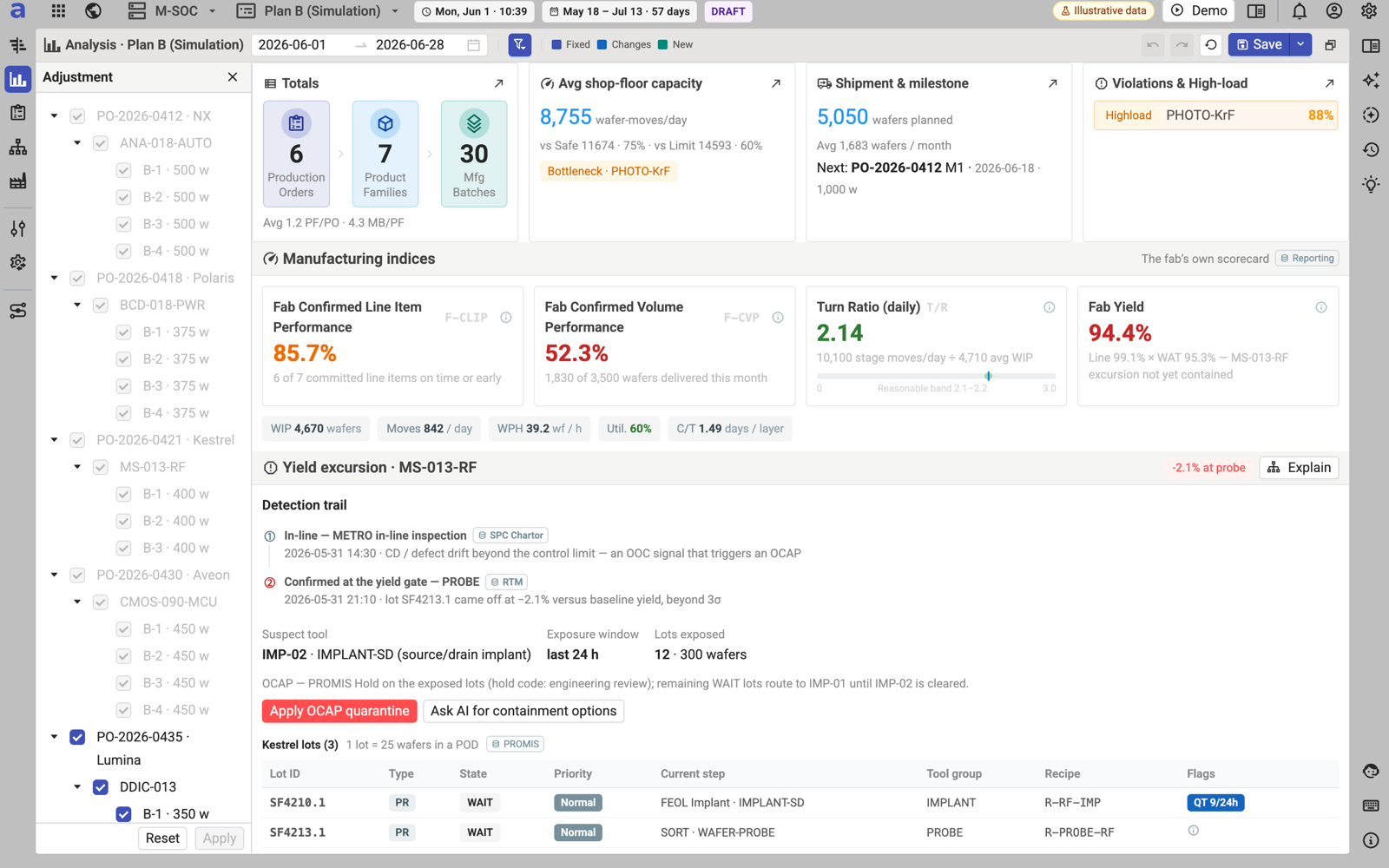
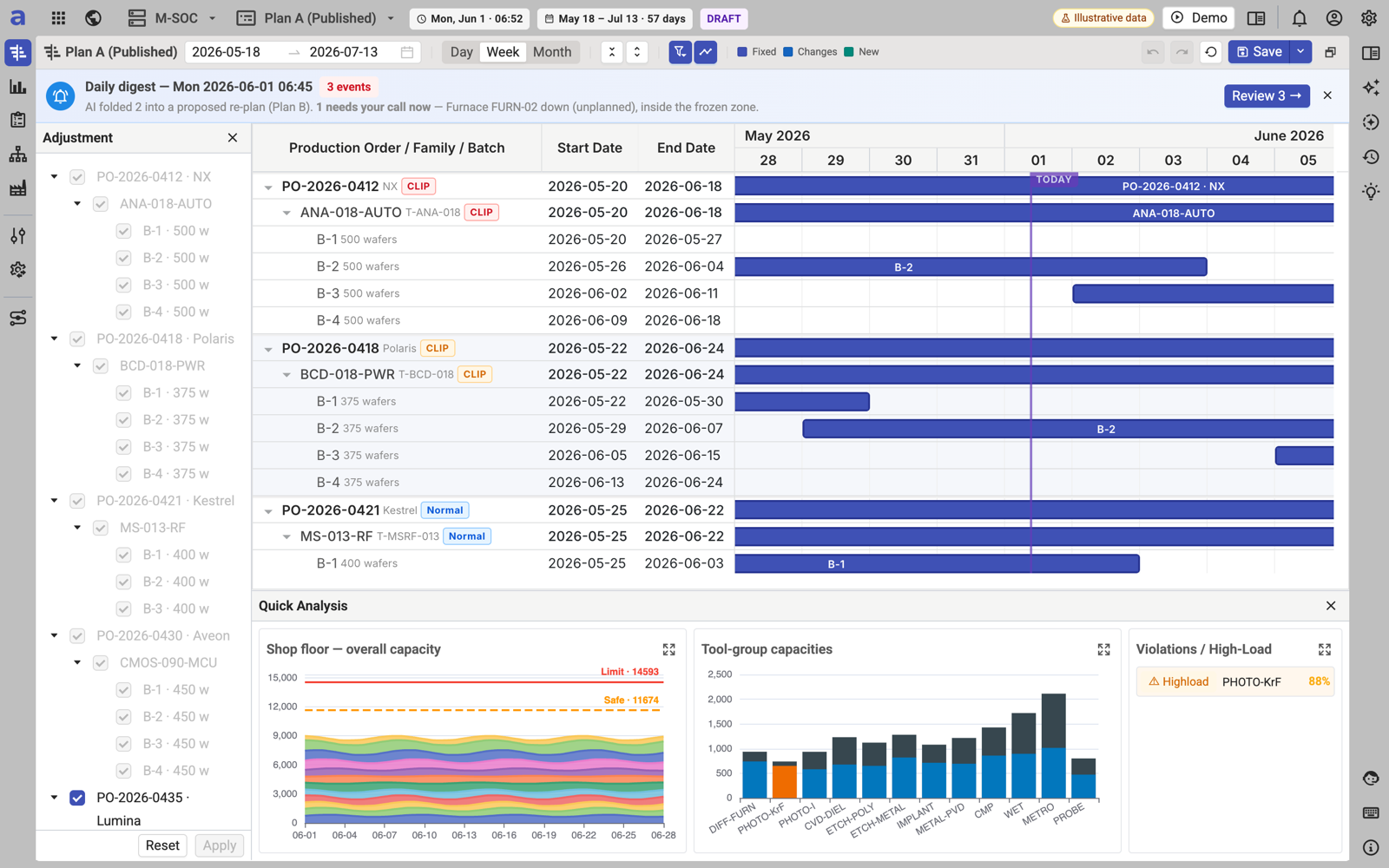
The dedicated forecasting view is in development for the December 2026 build. Today the forecast feeds the scheduler and shows up where the planner decides: in the KPI row, the commitment-risk panel and the daily digest. Screens below are from the October 2026 MVP on synthetic data.
Capabilities
Built for the demand patterns of memory and wafer fabs — tiers, generations and hyperscaler swings — not for consumer retail.
Multi-model ensemble forecasting
LSTM, Prophet, XGBoost and Transformer models compete per segment; aPlanner selects and re-weights the best combination automatically.
Bit-density and node awareness
Forecasts per bit-density tier (TLC / QLC, 128Gb → 1Tb) and per generation, rolled up to die and wafer starts — the units a NAND planner actually works in.
External signal integration
Market indices, commodity prices and leading demand signals can be added to the feature set once the fab decides which signals it trusts.
Hierarchical reconciliation
Forecasts reconcile across SKU, product family, customer and region so planning, sales and finance work from one set of numbers.
Confidence intervals
P10–P90 bands on every forecast feed the scheduler and the Monte-Carlo risk wrap, so safety stock and wafer starts are sized to real uncertainty.
Explainable forecasts
Each forecast carries its drivers and a bias flag per region or segment. No black box — the planner can see why a number moved.
Technical specifications
| Algorithm types | LSTM, Prophet, XGBoost, Transformer ensemble |
| Forecast horizons | 1 day to 24 months |
| Granularity | Bit-density tier, SKU, product family, customer, region |
| Data requirements | Minimum 12 months of history (24 months recommended); synthetic data in the MVP |
| Update frequency | Daily, weekly or on demand; automatic retraining as data arrives |
| Accuracy metrics | MAPE, bias, tracking signal, forecast value added |
| Status | Forecasting view in development for the December 2026 build; engine prototyped on synthetic fab data |
Forecast your fab's demand with us in 2027
The 2027 Korea pilot program starts with a planning readiness assessment on your own demand history.